
Dormer Contractor · Nassau County
Dormer Additions on Long Island
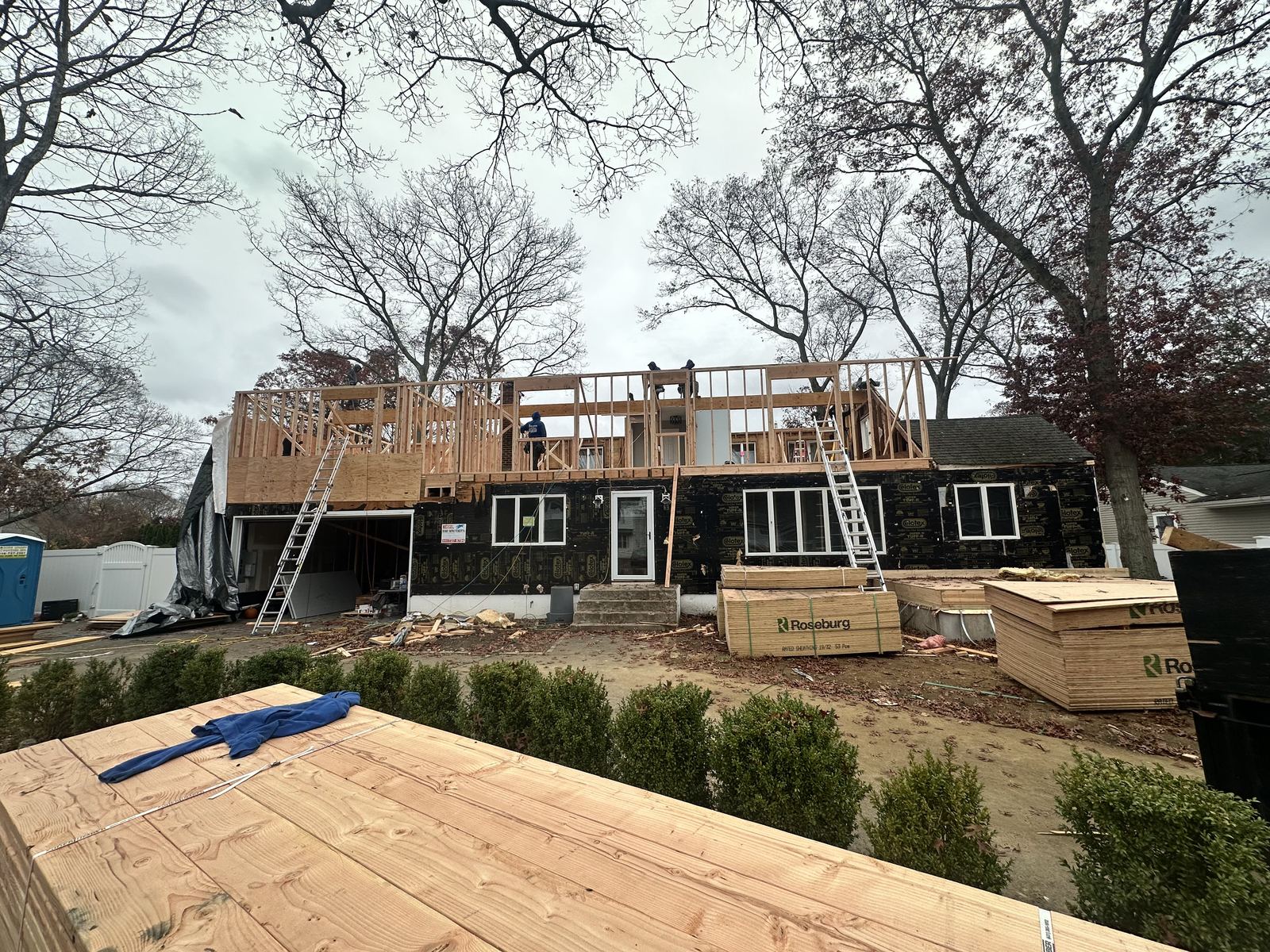
A dormer addition raises the roof of your half-story and turns unused attic space into full-height, code-compliant living area. Nassau County is full of postwar Cape Cods built between 1945 and 1965, and most of them were designed with an unfinished half-story that the builder always intended to be finished later. A dormer is how you finish it. It converts that dead attic into bedrooms, a bathroom, a home office, or a primary suite without touching your foundation or your yard. Plainview, Bethpage, Hicksville, and Levittown have some of the highest concentrations of dormer-ready homes on Long Island, which is exactly the work we do every week.
Types of Dormers We Build
Shed Dormers
A shed dormer runs the full width of the roof with a single flat, low-slope roofline. It converts your entire half-story into full-height living space and is the most common dormer we build on Long Island Cape Cods. A shed dormer typically yields 600 to 1,200 square feet of new floor area, enough for two or three bedrooms and a bathroom.
Gable Dormers
A gable dormer has a peaked roof that projects from the main roof to add headroom and a window to a single room. Gable dormers suit colonials, Tudor revivals, and brick homes, and they are popular on the larger houses in Garden City, Great Neck, and the North Shore estates. They add architectural detail where a full shed dormer would be too much.
Hip Dormers
A hip dormer uses a three-sided sloped roof that blends into homes with hip roofs rather than gable ends. It is a good match when you want the new dormer to read as part of the original roofline instead of a bolt-on addition. Hip dormers are common on the postwar ranches and Capes found throughout central Nassau County.
Full Second-Story Additions
A full second-story addition, or pop-top, removes the existing roof and builds a complete new floor over your first story. This is the choice when a dormer alone will not give you the square footage you need. It delivers the most space of any option and lets you lay out an entire floor of bedrooms, bathrooms, and a primary suite from scratch.
Our Dormer Process
Step 1: On-Site Consultation & Feasibility Assessment
We come to your home, measure the attic and roof, and check the existing framing. You tell us how you want to use the new space. We tell you honestly whether a shed, gable, or full second-story addition is the right fit for your Cape Cod, ranch, or colonial.
Step 2: Architectural Design & Engineering
Our architect and structural engineer produce stamped drawings that show the new floor plan, the roof structure, and the load path down to your foundation. These plans are what your township reviews, and they are the blueprint your crew builds from. Nothing is left to guesswork on site.
Step 3: Permit Filing
We file the stamped plans with your township and manage the review. Homes in Plainview, Syosset, and Bethpage fall under the Town of Oyster Bay, while parts of southern Nassau fall under the Town of Hempstead. We handle the counter, the corrections, and any village architectural review.
Step 4: Construction
One crew handles framing, roofing, siding, windows, insulation, mechanical, electrical, and plumbing, then drywall, trim, flooring, and paint. We open the roof only when the framing package is ready and dry it in fast, so your home stays protected while the new space takes shape.
Step 5: Final Inspection & Walkthrough
We schedule the final township inspections and secure your certificate of occupancy. Then we walk the finished space with you, address any punch-list items, and hand over a clean, code-compliant addition that is ready to live in.
Which Homes Are Best for Dormers?
Cape Cods are the classic dormer candidate because their steep roof already encloses a half-story that only needs headroom to become usable. Ranches and split-levels can work too, though a low-pitch ranch often gains more from a full second-story addition than from a dormer. Colonials usually take gable dormers for headroom and light rather than full shed dormers. The bulk of Long Island's dormer-ready housing stock was built from the 1950s through the 1970s, when Capes and ranches went up across Plainview, Bethpage, Levittown, and Hicksville. Homes framed with roof trusses instead of conventional rafters need an extra structural assessment, because a truss roof cannot simply be cut open. We check the framing type on site before we recommend an approach.
Dormer Addition Cost on Long Island
Dormer cost depends on the scope of the addition, the condition of your existing home, the finish level you choose, and the municipality that reviews the permit. A single gable dormer and a full-width shed dormer with two bedrooms and a bathroom sit at very different price points, so an honest number only comes after we see your home. What we can promise is how we price: every quote from Meigel is a fixed-price written estimate with no hidden fees, so the number you approve is the number you pay unless you ask us to change the scope.
Permits & Building Codes
Every dormer addition requires stamped structural engineering drawings, architectural plans, and a township permit review before construction starts. In central Nassau County that review runs through the Town of Oyster Bay, and homes in the southern part of the county fall under the Town of Hempstead. If your home sits inside an incorporated village, the village may add its own architectural review board approval on top of the town permit. We prepare the full package, file it, respond to plan corrections, and schedule every inspection so your dormer is legal, documented, and ready for a certificate of occupancy.
Frequently Asked Questions
How long does a dormer addition take on Long Island?
Most dormer additions in Nassau County take eight to fourteen weeks from the first day of construction to the final walkthrough. Design, engineering, and township permit review add several weeks before that. A full-width shed dormer with multiple rooms takes longer than a single gable dormer, and weather during the roof-open phase can shift the schedule.
Do I need a permit for a dormer in Nassau County?
Yes. Every dormer addition in Nassau County requires a building permit, stamped structural engineering drawings, and architectural plans reviewed by your township. In the Town of Oyster Bay and the Town of Hempstead that means a full plan review before any framing begins. We file all of this for you and manage the inspections.
Can you add a dormer to a ranch-style home?
Sometimes. A true single-story ranch has a low roof pitch that limits usable headroom, so a dormer is not always the right tool. In many cases a full second-story addition gives a ranch owner more space than a dormer would. We assess the existing roof structure and framing on site and tell you which option fits your home.
Will a dormer addition increase my home's value?
A dormer that adds finished bedrooms and a bathroom typically raises both the usable square footage and the market value of a Long Island home, especially in towns like Plainview, Bethpage, and Hicksville where buyers want four-bedroom layouts. The exact return depends on your finish level and your local market.
Do you handle all permits and inspections?
Yes. We file the architectural and engineering plans, pull the building permit, schedule every required inspection, and handle any village architectural review board approval. You do not deal with the Town of Oyster Bay or the Town of Hempstead counter. We manage it start to finish.
Dormer Service Areas
We build dormers throughout central Nassau County. See the towns we cover most often, or read about our home extensions work.
Ready to Add Space to Your Home?
Free on-site consultation. Fixed-price written estimate. No pressure.
Licensed in Nassau & Suffolk County · Family Owned · Serving Long Island Since 2009